
Upland Game Bird Outlook - 2015
Upland game bird hunting looks stable and improving for 2015.
Another mild winter timely rainstorms during spring and early summer provided good rearing conditions for young upland birds and will likely lead to increased populations.
“Reports across the state are up for a variety of species,” Idaho Fish and Game’s upland game and migratory bird coordinator.
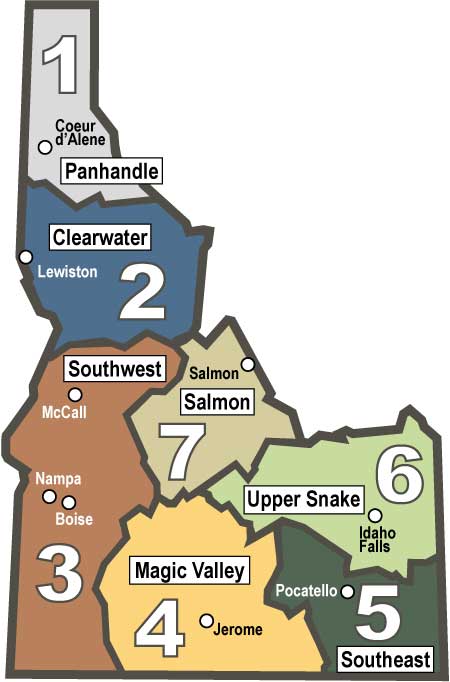
Out of Fish and Game’s seven regions, nearly all found stable-to -improving populations of upland game birds compared with last year and the 10-year trend.
Fish and Game wildlife managers rely on a combination of anecdotal reports from the field and surveys known as “brood routes” where F&G personnel drive set routes and spot birds, then compare the numbers with what was seen in previous years.
It gives them a predictor of what hunters are likely to see when during the fall season.
Weather is a primary factor in upland bird populations from year to year, and although Idaho is in a drought, timely rainstorms after hatches provide plant growth and also spark insect populations that feed the young birds.
Another mild winter timely rainstorms during spring and early summer provided good rearing conditions for young upland birds and will likely lead to increased populations.
“Reports across the state are up for a variety of species,” Idaho Fish and Game’s upland game and migratory bird coordinator.
Out of Fish and Game’s seven regions, nearly all found stable-to -improving populations of upland game birds compared with last year and the 10-year trend.
Fish and Game wildlife managers rely on a combination of anecdotal reports from the field and surveys known as “brood routes” where F&G personnel drive set routes and spot birds, then compare the numbers with what was seen in previous years.
It gives them a predictor of what hunters are likely to see when during the fall season.
Weather is a primary factor in upland bird populations from year to year, and although Idaho is in a drought, timely rainstorms after hatches provide plant growth and also spark insect populations that feed the young birds.

2015 upland game bird outlook by species and region are available at the links below:
- Panhandle Region - Pheasant, gray partridge, California quail, forest grouse (dusky, ruffed, spruce) – PDF, [85 KB]
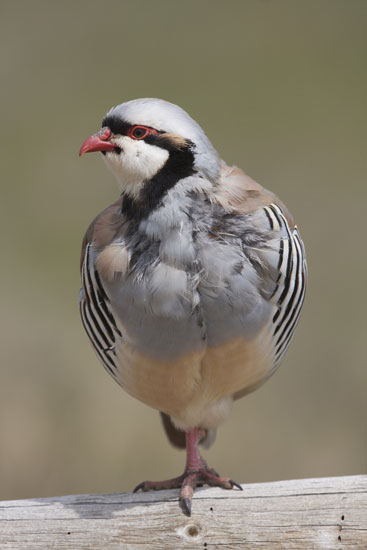
- Clearwater Region - Pheasant, chukar, gray partridge, California quail, mourning dove, forest grouse (dusky, ruffed) [PDF, 95 KB]
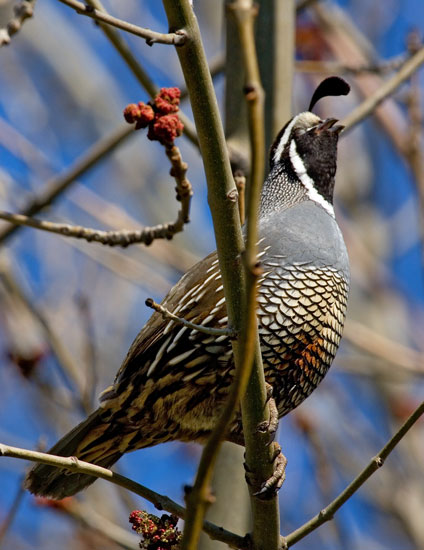
- Southwest Region - Pheasant, greater sage-grouse, chukar, gray partridge, California quail, mourning dove, forest grouse (dusky, ruffed, spruce) [PDF, 95 KB]
- Magic Valley Region - Pheasant, Columbian sharp-tailed grouse, chukar, gray partridge, California quail, forest grouse (dusky, ruffed) [PDF, 130 KB]
- Southeast Region - Pheasant, Columbian sharp-tailed grouse, chukar, gray partridge, forest grouse (dusky, ruffed) [PDF, 85 KB]
- Upper Snake Region - Pheasant, Columbian sharp-tailed grouse, chukar, gray partridge, forest grouse (dusky, ruffed) [PDF, 90 KB]
- Salmon Region - Pheasant, chukar, gray partridge, forest grouse (dusky, ruffed, spruce) [PDF, 85 KB]
While weather certainly impacts game bird populations on a yearly basis, the quantity and quality of nesting habitat is critical to maintaining Idaho’s game bird populations for the long-term. Game birds require adequate undisturbed nesting cover to successfully hatch a nest and then abundant broadleaf plants and insect populations to successfully raise chicks to adult size.
Overall populations can change significantly from one year to the next. This phenomenon is tied to their basic biology. Game birds are very productive and short lived, with the largest portion of the population at any given time consisting of young birds of the year. When weather and nesting conditions are favorable, populations are able to respond and increase rapidly. On the other hand, when conditions are not favorable, dramatic population declines can result.
Because both weather and habitat conditions are critical to the abundance and survival of game birds, hunting success will vary widely.
Fish and Game monitors upland game bird populations across the state by conducting brood route surveys each August. Beginning at sunrise, department biologists drive slowly along designated, 20-mile routes and count the number of birds they observe. Each brood route is surveyed three times during the month using standardized methods when weather conditions are optimal for observing game birds.
Results of these surveys are then compared with results from the previous year and the previous 10-year average, which generally offers a fairly reliable indicator of the actual game bird population. It is important to note that our outlook reflects the best available information on the relative abundance of upland game birds among the regions of Idaho and cannot be used to predict hunting conditions or local population densities at any single location within the state.
Overall populations can change significantly from one year to the next. This phenomenon is tied to their basic biology. Game birds are very productive and short lived, with the largest portion of the population at any given time consisting of young birds of the year. When weather and nesting conditions are favorable, populations are able to respond and increase rapidly. On the other hand, when conditions are not favorable, dramatic population declines can result.
Because both weather and habitat conditions are critical to the abundance and survival of game birds, hunting success will vary widely.
Fish and Game monitors upland game bird populations across the state by conducting brood route surveys each August. Beginning at sunrise, department biologists drive slowly along designated, 20-mile routes and count the number of birds they observe. Each brood route is surveyed three times during the month using standardized methods when weather conditions are optimal for observing game birds.
Results of these surveys are then compared with results from the previous year and the previous 10-year average, which generally offers a fairly reliable indicator of the actual game bird population. It is important to note that our outlook reflects the best available information on the relative abundance of upland game birds among the regions of Idaho and cannot be used to predict hunting conditions or local population densities at any single location within the state.
Last Updated: September 4, 2015
Top of page
Top of page